
1. Introduction
NFC stands for near-field-communication is a standard on which devices are build, allowing wireless communication between 2 devices.
The NFC is build upon RFID - radio-frequency-identification standard and devices.
The wireless communication is on 13.56MHz open wireless frequency and is based on close proximity - less than 4cm / 1.5" .
Usually out of the 2 devices communicating one is a reader/writer device and the other is a card/token/ring... device which contains a data field.
Unique feature of the NFC is that the card/token/ring... device does not have any power source. However when in close proximity the reader/writer device is inducing power to the card/token/ring... device, so that it is powered on, and responding to the reader/writer device.
2. Look at both sides of devices
One example of how a reader/writer device looks like is on this image.
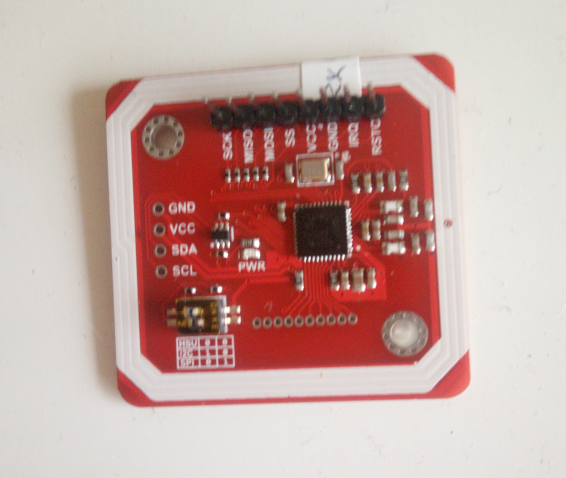
The dimensions of the device are defined by the antenna on the board, and more specifically by the frequency on which NFC communicates.
Some examples of the card/token/ring... device are on the following image -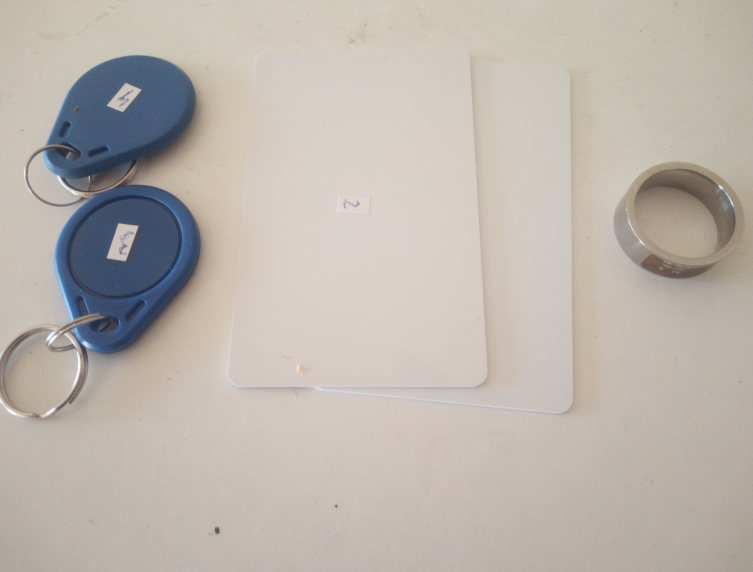
While the items are very different in shape and look they have identical functionality.
Currently card/token/ring... devices are most often used for access control - at office buildings, hotels, subways, etc.
Credit card issuers (VISA,MasterCard,American Express...) and banks did embrace the NFC interface and most of the debit and credit card in use today are also NFC enabled.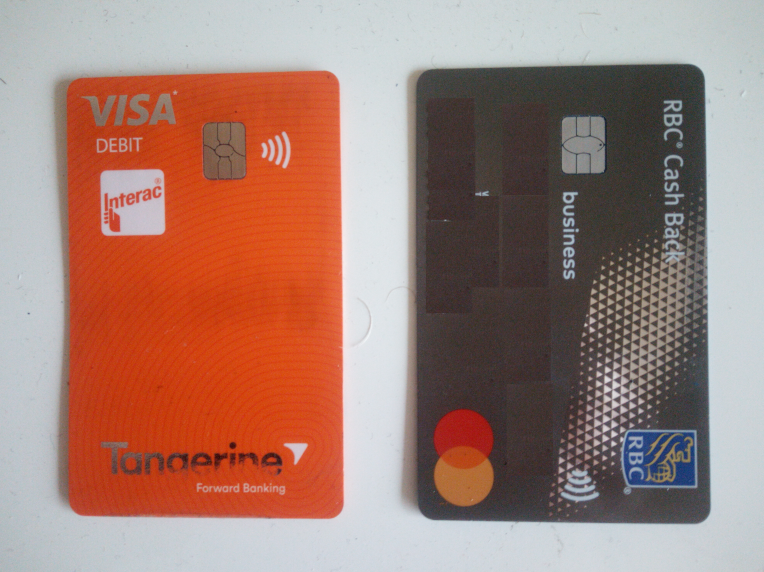
Most often the NFC feature of these cards is used for contact-less payments of small amounts.
3. UID - Unique identifier
Every NFC card/token/ring... device, be it a debit/credit card or ordinary card/token/ring... has a Unique identifier (UID).
It is a unique and read-only value, programmed at the time of manufacturing of the card/token/ring.
For NFC credit cards UID is 7 bytes hexadecimal, and for bank debit cards it is usually 4 bytes hexadecimal, but could be 7 bytes as well. The value of each byte can be from 0-255 decimal.
For ordinary NFC card/token/ring the UID is 4 bytes.
The UID of a credit card or a bank debit card is not the card number which is usually 16 digits decimal.
4. Access control, billing
We include in our API set for the power switch a command to read the UID of any NFC card.
A credit card or a bank debit card could be registered on our web site, or through our billing/payment API.
Then the registered payment information can be associated with the same or another NFC credit card or a bank debit card, or with an ordinary NFC card/token/ring.
The associated NFC card, when in close proximity and being read could trigger enabling of access, and/or turning the power switch on, start of measuring of consumed power and calculation for billing.
5. Data fields on NFC cards
Each NFC device can store some amount of data, and this data is protected.
The amount of data varies from 600 bytes to around 4k bytes. The data is divided as sections - sectors, each of 16 bytes. The data in each sector can be protected from reading by authentication key.
The NFC credit card and bank debit cards have their information protected - can not be read. A project or a business has to have special agreement with the issuers to be able to read the data.
New NFC cards/tokens/rings come with a standard, default, and known key for authentication. All data can be read.
We have a NFC API which allows:
- identifying of the card capabilities
- writing data on card, defining authentication key
- reading data on card, with defined authentication key
6. Conclusion
Large technology companies did introduce their payment systems using the NFC interface - Apple pay, Google pay, Samsung pay.
We did develop and have currently the (same or similar) payment capabilities of such large technology companies.
In addition we have flexibility to use ordinary NFC cards/tokens/rings and read/store data allowing assigning of new capabilities.
We offer and our users and customers can order one or more of standard NFC cards/tokens/rings. Rings have a variety of sizes to choose from.