
'Gas station' model vs 'parking lot' model - visions for the upcoming mass electrification
1. introduction
With the mandate of many governments to end sales of internal combustion vehicles and offer only electric vehicles, currently hidden and not quite pressing need emerges.
How would the exponential growth of electric vehicles be handled?
How are the electric cars going to be recharged?
How much would the electric power consumption going to grow?
How is the electric grid going to manage the significant but unpredictable loads?
Currently there are initiatives by both private businesses and public organizations - power utilities, municipalities, city/state/federal government organizations.
It seems almost any current initiatives pick the 'gas station' model for handling electric vehicles.
In this model the vehicles come to a specific location, which has a number of pumps, the drivers fairly quickly load and pay for gas, then leave.
2. What is wrong with the picture?
Our local utility company - BC Hydro (in British Columbia, Canada) did put an invitation to residents to propose sites to put charging stations for electric vehicles of residents living near by.
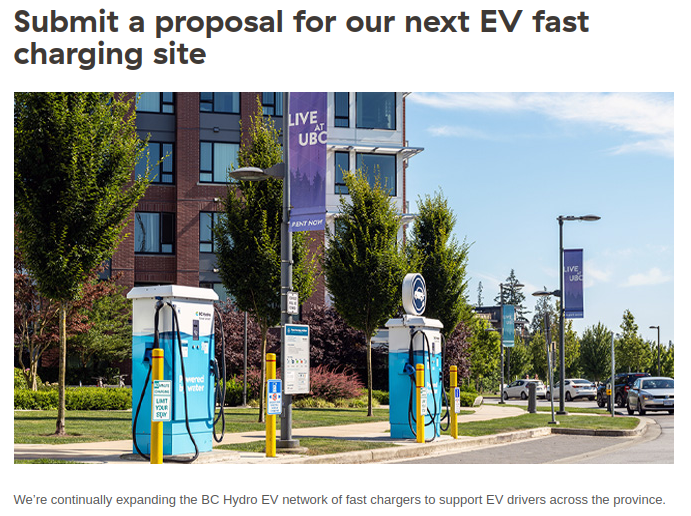
To put it in words - the image is an idyllic picture with 2 charging stations, currently empty and waiting for residents of the apartment buildings to come and charge their electric vehicles.
So, what is wrong with the picture?!
Let say the visible on picture apartment building and its neighbors around have several hundred or several thousands of residents, estimated to have at least several hundred vehicles.
Nothing wrong currently with the picture - the few electric can come any time, stay awhile, then leave.
Yet, when the percentage of electric vehicles starts growing, there would most likely be a line of cars stretching way outside of picture, with residents who spend their lunch time and evening hours waiting for the chance to charge,
To keep the civil order, police presence may be required.
Another serious issue is that only fast chargers would be used - to shorten the charging time.
Fast charging accelerates deterioration of the battery of the vehicle. Replacement batteries currently cost 30-50% of a new car price.
3. What is the alternative?
We propose to move from the 'gas station' model of electric vehicles charging to the 'parking lot' model.
This is not new or revolutionary idea.
Hotels did embrace the use of a main power switch for the whole room.
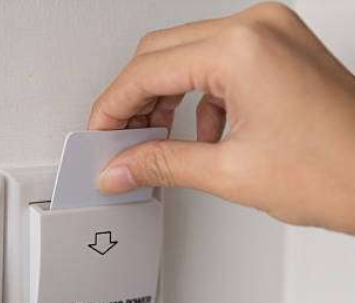
Usually close to the hotel room door, inside there is a socket where the visitor plugs their door entry key card. This electrifies the room.
In the same way we propose installing devices, which controls power, located where the cars stay - in the parking lot.
Daytime it could be the parking lot of the place of work, and evening / night time it would be the parking lot of the apartment building or near by street.
4. 'Parking lot' model
In this model electric vehicles stay for extended period of time at a specified spot, and the owner instead of waiting inside leaves and locks the car, going to work or home.
We propose installing remotely controlled switches for electric power for most or even all parking spots.
Our initial concept product, developed for the 'parking lot' model has these parameters:
- WiFi local/global connectivity
- sensor for current consumed
- 1 phase
- input AC voltage - up to 450V
- current consumed - up to 150A
- sensor for internal switch temperature
- RFID/NFC reader for access control and/or payment
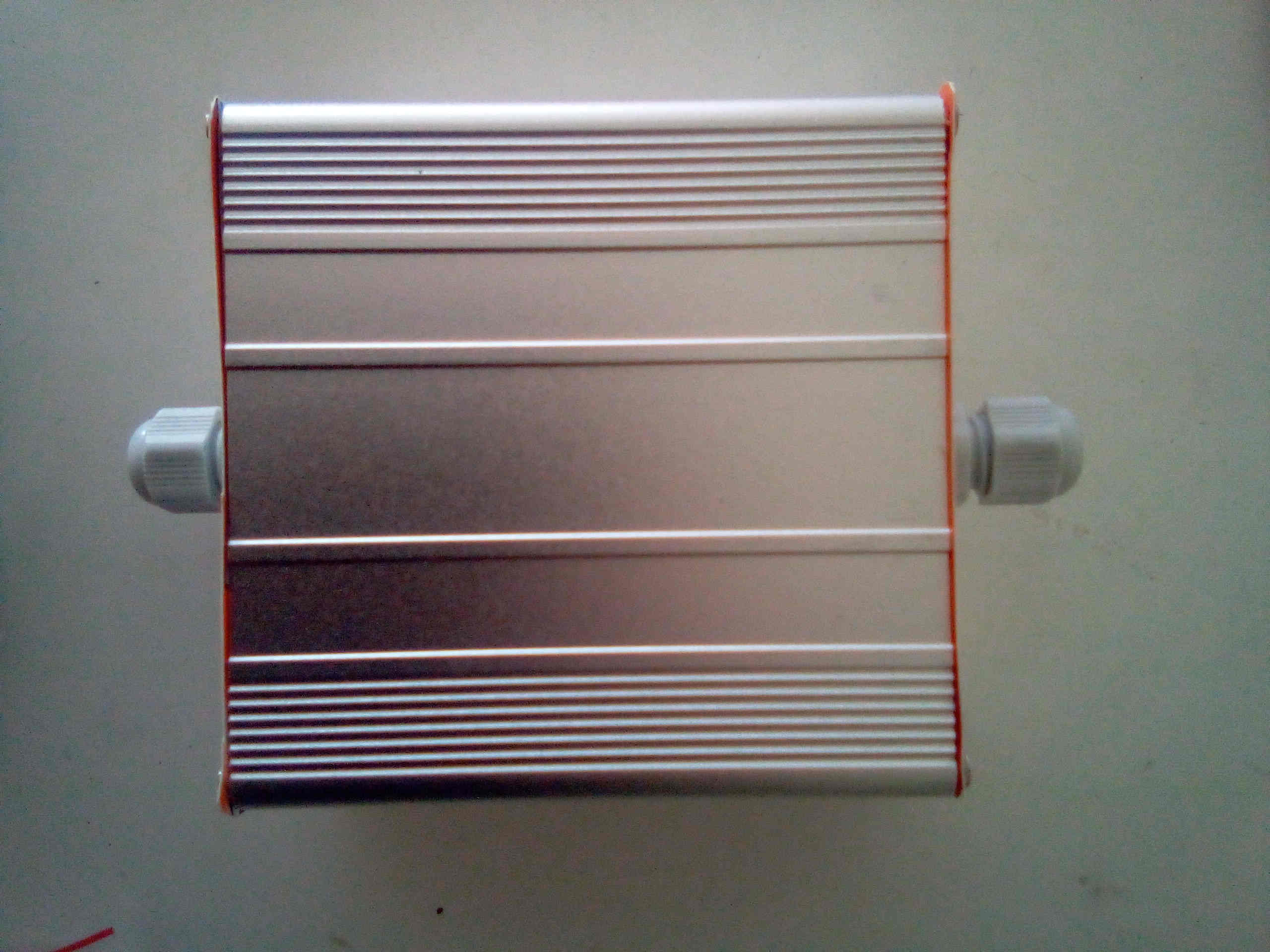
After parking, the electric vehicle owner would connect their own charger between the vehicle and switch outlet and would activate powering trough NFC/RFID with their debit/credit card, and/or a NFC/RFID card, token or ring.
This and the following products would measure consumed power, The user can specify the duration of the charge, and/or the amount of power to be consumed.
5. Regulating usage - for producers/utilities
Electric vehicles are significant consumers of electric energy.
While not yet a problem, start of charging at the same moment of significant number of electric vehicles will become a problem in the future.
Power producing utility companies have to balance generating of power with the consumption of power, non-stop, all the time.
Any dis-balance leads to cascading failures and blackouts.
That's why we include remote control capabilities in our products with the possibility to control when the switch is turning on or off, and calculate consumption.
Control could be delegated to the utility company, giving them a capabilities to gradually turn on power, or turn off power if necessary.
6. Regulating usage - for large/commercial power consumers
Unlike individual power consumers which can turn/on off various power consuming devices at any time, large power consumers have to declare their usage in advance.
If by some reason these large consumers exceed the specified usage they are charged at a significant bigger rates because of this exceeding.
So in case of electrified parking lots it would be necessary to regulate which outlets do get turned on, when they get turned on and for how long.
In the same way control can be delegated to the specific business or organization.
Reference:
Survey 1 - on hardware
Survey 2 - on features
Survey 3 - on software
For developers - power switch API
Subscribe to - our mailing list